BIOGRAPHICAL SERIES · INDEPENDENT EDITORIAL
Finding Her Public Voice
Share this article
For Instagram, TikTok and other apps, use More apps where supported, or copy the link and paste it into your post or message.
From a constitutional reading at thirteen to an address in Oviedo, Leonor’s early public appearances introduced several ways a royal heir can speak in an institutional role.
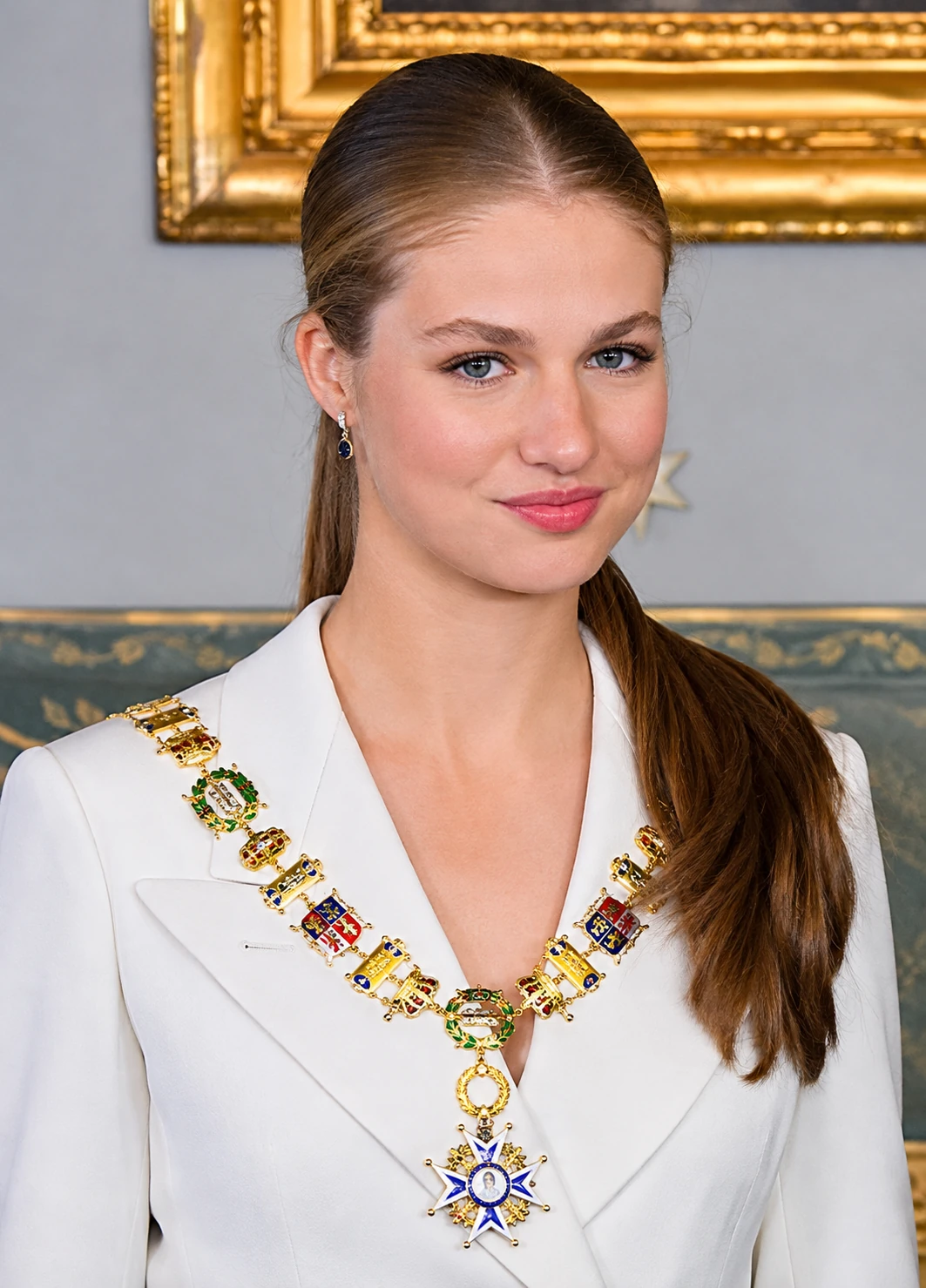
On 31 October 2018, Princess Leonor read a constitutional text in public. It was her thirteenth birthday, and the subject connected the occasion to the legal framework of the Spanish monarchy. The reading was one of several early appearances through which the heir to the throne took part in public events with distinct purposes: constitutional, cultural and institutional.
Born in Madrid on 31 October 2005, Leonor is the elder daughter of Felipe and Letizia. She became heir when her father was proclaimed King Felipe VI on 19 June 2014. That change did not make her the reigning Queen. Over the following years, her appearances included a speech at the Princess of Asturias Awards, a literary reading with her younger sister Sofía and a solo activity at Instituto Cervantes.
A constitutional reading at thirteen
Leonor’s public reading on 31 October 2018 brought the Spanish Constitution into her early appearances as heir. A constitutional text is more than a ceremonial subject: the Constitution sets out the structure of the state and defines the Crown’s place within it. Reading it aloud made a legal text accessible in a different form from the written articles on which Spain’s institutions depend.
Casa Real publishes Articles 56 to 65 of the Constitution, which concern the Crown. Article 56 identifies the monarch as head of state and gives the monarch the highest international representation of the Spanish state. That role is distinct from day-to-day government. Leonor’s 2018 reading was a public engagement with constitutional text; it was not the oath she would later take as the adult heir.
An address at the awards
On 18 October 2019, Leonor gave her first Princess of Asturias Awards speech at the Campoamor Theatre in Oviedo. The occasion differed from the constitutional reading: instead of presenting a legal text, she addressed an audience at an awards event. The venue and date place the speech in Asturias, the region associated with the principal title she holds as heir.
Her official biography also lists other historical titles, including those of Girona and Viana, and connects them to historic kingdoms and crowns. Article 57.2 of the Constitution attaches the title of Princess or Prince of Asturias, and traditional titles belonging to the heir, from birth or from the event that makes someone heir. For Leonor, that event was Felipe’s proclamation as King in 2014.
Don Quixote with Sofía
On 23 April 2020, Leonor and her younger sister Sofía read from Don Quixote together. Their shared appearance shifted the subject from constitutional law and an awards address to literature. Unlike Leonor’s first solo institutional activity the following year, this was a reading the sisters undertook together. It also differed from the oath Leonor would take before the Cortes Generales on reaching eighteen.
The choice of a literary work also shows how a public reading can serve a different purpose from a speech. A reader gives voice to someone else’s text; a speaker at an awards ceremony addresses the event’s audience. Sofía, born on 29 April 2007, joined Leonor for this activity. Their later roles at Leonor’s eighteenth-birthday oath were different: Sofía attended, while Leonor took the heir’s oath.
A solo activity at Instituto Cervantes
On 24 March 2021, Leonor carried out her first solo institutional activity at Instituto Cervantes. Unlike the Don Quixote reading she shared with Sofía, this was an engagement Leonor undertook on her own. Its setting was also connected to a cultural institution, rather than to the Campoamor Theatre’s awards ceremony or the constitutional text she had read at thirteen.
An institutional activity is an official engagement connected to an organisation or public purpose; it need not take the form of a speech. The Instituto Cervantes appearance belonged to a year in which Casa Real also announced Leonor’s next stage of education. The February 2021 announcement described a two-year International Baccalaureate programme at UWC Atlantic College in Wales, alongside developing commitments in Spain.
Reading, addressing and taking an oath
Leonor’s appearances are easier to understand when their forms are kept distinct. The 2018 event involved reading a constitutional text; the 2019 awards occasion included an address; and the 2020 activity with Sofía involved reading literature. Each placed her voice in a public setting, but the text, audience and purpose changed. None was the coming-of-age oath prescribed for the heir.
An oath has a particular constitutional function. Article 61 distinguishes the monarch’s oath at proclamation from the heir’s oath upon coming of age. The heir’s oath also includes loyalty to the monarch. This is not simply another term for an awards speech or a reading: it is an undertaking specified in the Constitution, associated with a defined moment in the heir’s life.
The next turning point
On 31 October 2023, her eighteenth birthday, Leonor took the heir’s constitutional oath before the Cortes Generales. Sofía attended the occasion but did not take that oath. The setting brought Leonor’s earlier public use of constitutional text into a different institutional context: she was now undertaking the oath assigned to the heir on coming of age, rather than reading a text at an event.
The distinction matters because Leonor remained heir, not reigning monarch. Her father’s proclamation in 2014 had changed her place in the succession; her oath in 2023 marked her coming of age within that role. The next chapter follows the eighteenth-birthday ceremony itself, examining the promise before the Cortes Generales and how it fits into Spain’s constitutional monarchy.
A question to take with you
What was the difference between Leonor’s 2018 constitutional reading and her 2023 oath?
Reveal the answer
In 2018, at thirteen, she read a constitutional text publicly. In 2023, on her eighteenth birthday, she took the heir’s constitutional oath before the Cortes Generales, including loyalty to the monarch.
Reading progress is saved only in this browser. It is not linked to your account.
Sources and further reading
- Casa Real · Official biography
- Casa Real · Education in Wales
- Casa Real · Military education plan
- Casa Real · Constitutional oath
- Casa Real · Official profile and speeches
- Casa Real · Aviation education
- Casa Real · University education announcement
- Casa Real · First solo activity: Instituto Cervantes
- Casa Real · Princess of Asturias Awards 2019
- Casa Real · Constitutional roles and succession
- Casa Real · Graduation at UWC Atlantic College
- Casa Real · Felipe VI: official biography
- Casa Real · Sofía: education in Wales
Editorial sources checked: