BIOGRAPHICAL SERIES · INDEPENDENT EDITORIAL
A New Chapter in Wales
Share this article
For Instagram, TikTok and other apps, use More apps where supported, or copy the link and paste it into your post or message.
In 2021, Spain’s future monarch began a two-year International Baccalaureate programme at an international boarding school.
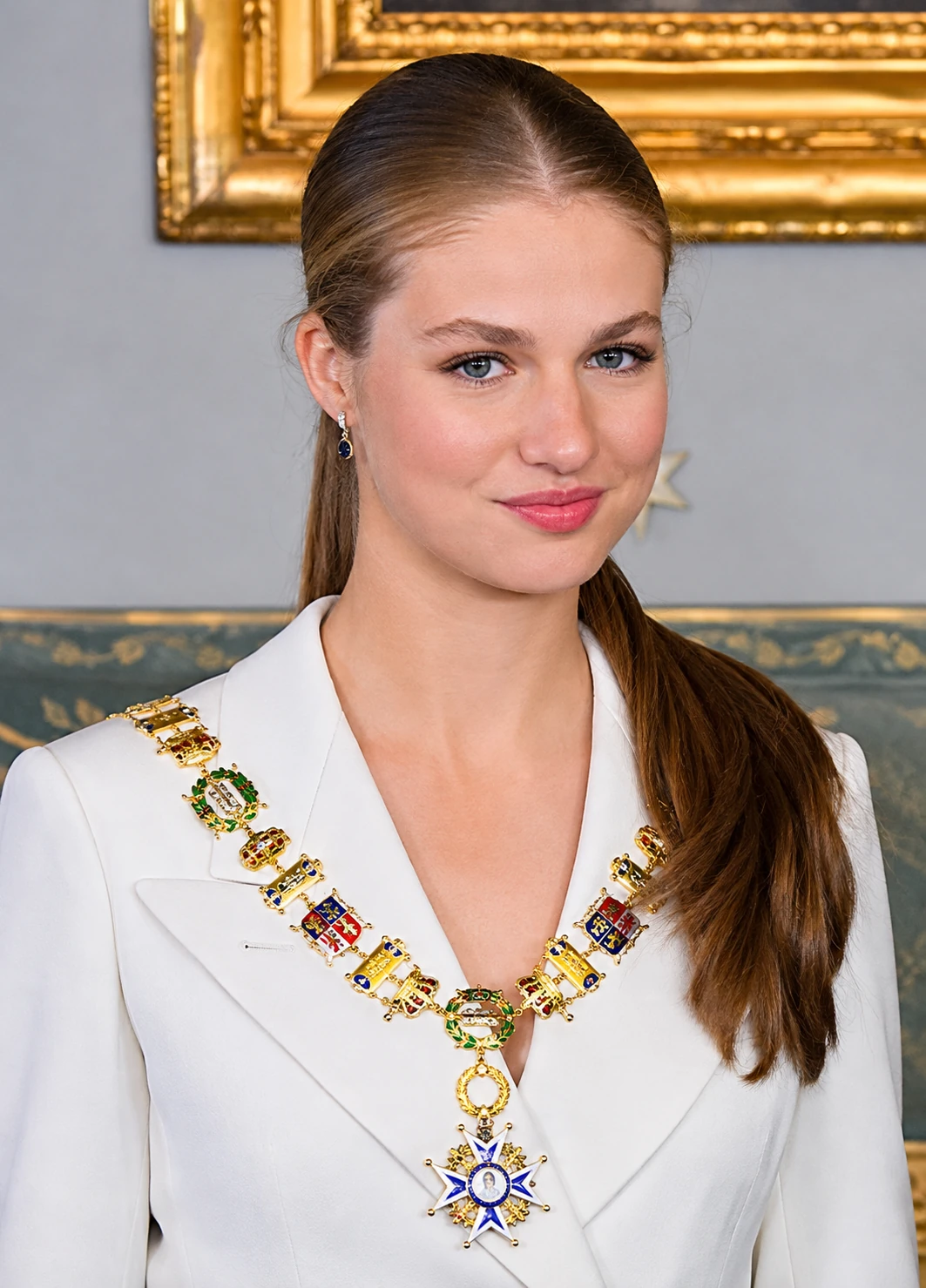
On 10 February 2021, Casa Real announced that Princess Leonor would study for an International Baccalaureate at UWC Atlantic College in Wales. The two-year programme covered the 2021–22 and 2022–23 academic years. For the eldest daughter of King Felipe VI and Queen Letizia, born in Madrid on 31 October 2005, the announcement identified a school beyond Spain and a course bringing several fields of study together.
Leonor was already heir to the Spanish throne: she had acquired that position when her father was proclaimed King on 19 June 2014. Being heir did not make her the reigning Queen. Her education in Wales formed part of a wider timetable that also included institutional activity in Spain, followed by an announced period of military education across three branches of the armed forces.
The February announcement
Casa Real’s February 2021 announcement named both the school and the qualification: UWC Atlantic College in Wales and the International Baccalaureate. It also set out the programme’s intended length, from the 2021–22 academic year through 2022–23. Rather than describing a single specialist subject, the announcement presented an education combining academic disciplines with other activities, including creativity, physical activity and community service.
The International Baccalaureate is an educational programme designed around study across several subject areas. In Leonor’s announced course, sciences and humanities were joined by work on knowledge and a research essay. Those elements distinguish the programme from a course centred on only one discipline: they ask students to combine subject learning with broader questions about evidence, interpretation and independent investigation.
How selection worked
The 2021 announcement described a selection process that began anonymously and was followed by remote tests. The anonymous initial stage meant that the first selection was conducted without identifying the candidate by name; later tests were carried out at a distance. Casa Real included these details alongside the announcement of Leonor’s place in the two-year programme at UWC Atlantic College.
Selection and the subsequent course were different stages. The initial process concerned admission; the programme itself involved academic study, research and activities beyond the classroom. Remote testing describes how a later stage of selection was conducted, not a subject Leonor studied. That distinction helps explain the announcement’s sequence: first a route into the school, then the curriculum planned for the two academic years.
Sciences and humanities
The curriculum described in February 2021 brought sciences and humanities into the same programme. Science subjects investigate the natural world through methods that can include observation, experiment and analysis. Humanities subjects examine human culture and experience, often through texts, historical interpretation and argument. Casa Real’s description placed both broad areas within Leonor’s International Baccalaureate education rather than announcing a single narrow specialism.
Studying across these fields can mean encountering different kinds of questions and evidence. A scientific investigation may test an explanation against observations, while a humanities argument may compare interpretations of a text or event. Both require careful reasoning, but they do not always use evidence in the same way. The announced programme’s combination gave those contrasting approaches a place in the same course of study.
Knowledge and research
Alongside sciences and humanities, the announcement named theory of knowledge and a research essay. Theory of knowledge examines how people arrive at and assess what they claim to know. It can involve asking how an argument is supported, what counts as evidence in a particular field, and why different methods may lead to different conclusions. It is a way of examining the foundations of learning itself.
A research essay, by contrast, gives a student a sustained piece of written investigation. It involves framing a question, examining relevant material and organising an argument in response. The two elements are connected but distinct: theory of knowledge considers how knowledge and evidence work, while an essay applies research and reasoning to a particular subject. Casa Real listed both within the two-year course.
A school with an international community
UWC Atlantic College was described in the announcement as a boarding school with houses bringing together students of diverse nationalities, origins and beliefs. Boarding means that students live at school during their studies, making residential accommodation part of the institution as well as its classrooms. In Leonor’s announced programme, that setting accompanied the academic curriculum and the activities listed by Casa Real.
The boarding-house description gives a more concrete sense of the school’s international character than its location alone. Wales was the place of study, while the residential community was described in terms of varied backgrounds and beliefs. The announcement also included community service alongside creativity and activity, showing that the programme encompassed organised pursuits beyond its academic subjects and research requirements.
Study and commitments in Spain
The February announcement said that study would continue alongside Leonor’s developing commitments in Spain. Shortly afterwards, on 24 March 2021, she undertook her first solo institutional activity at the Instituto Cervantes. That engagement preceded the announced start of the Welsh programme in the 2021–22 academic year. The announcement nevertheless placed her planned studies and developing institutional commitments together, rather than presenting education abroad as a break from public activity in Spain.
On 20 May 2023, Leonor celebrated her graduation at UWC Atlantic College with her parents and Sofía present. Casa Real recorded her receiving a diploma and completing two years of boarding study. A military plan announced in March had already outlined the next stages: Zaragoza in 2023–24, Navy education in 2024–25 and San Javier in 2025–26. The next chapter returns to her public voice, following the readings and speeches alongside these educational milestones.
A question to take with you
What did Leonor study in Wales?
Reveal the answer
Casa Real announced a two-year International Baccalaureate programme at UWC Atlantic College for 2021–22 and 2022–23, combining sciences and humanities with theory of knowledge, a research essay, creativity, activity and community service.
Reading progress is saved only in this browser. It is not linked to your account.
Sources and further reading
- Casa Real · Official biography
- Casa Real · Education in Wales
- Casa Real · Military education plan
- Casa Real · Constitutional oath
- Casa Real · Official profile and speeches
- Casa Real · Aviation education
- Casa Real · University education announcement
- Casa Real · First solo activity: Instituto Cervantes
- Casa Real · Princess of Asturias Awards 2019
- Casa Real · Constitutional roles and succession
- Casa Real · Graduation at UWC Atlantic College
- Casa Real · Felipe VI: official biography
- Casa Real · Sofía: education in Wales
Editorial sources checked: