BIOGRAPHICAL SERIES · INDEPENDENT EDITORIAL
The Day Her Future Changed
Share this article
For Instagram, TikTok and other apps, use More apps where supported, or copy the link and paste it into your post or message.
On 19 June 2014, Felipe VI became Spain’s king and his eldest daughter, Leonor, became heir to the throne.
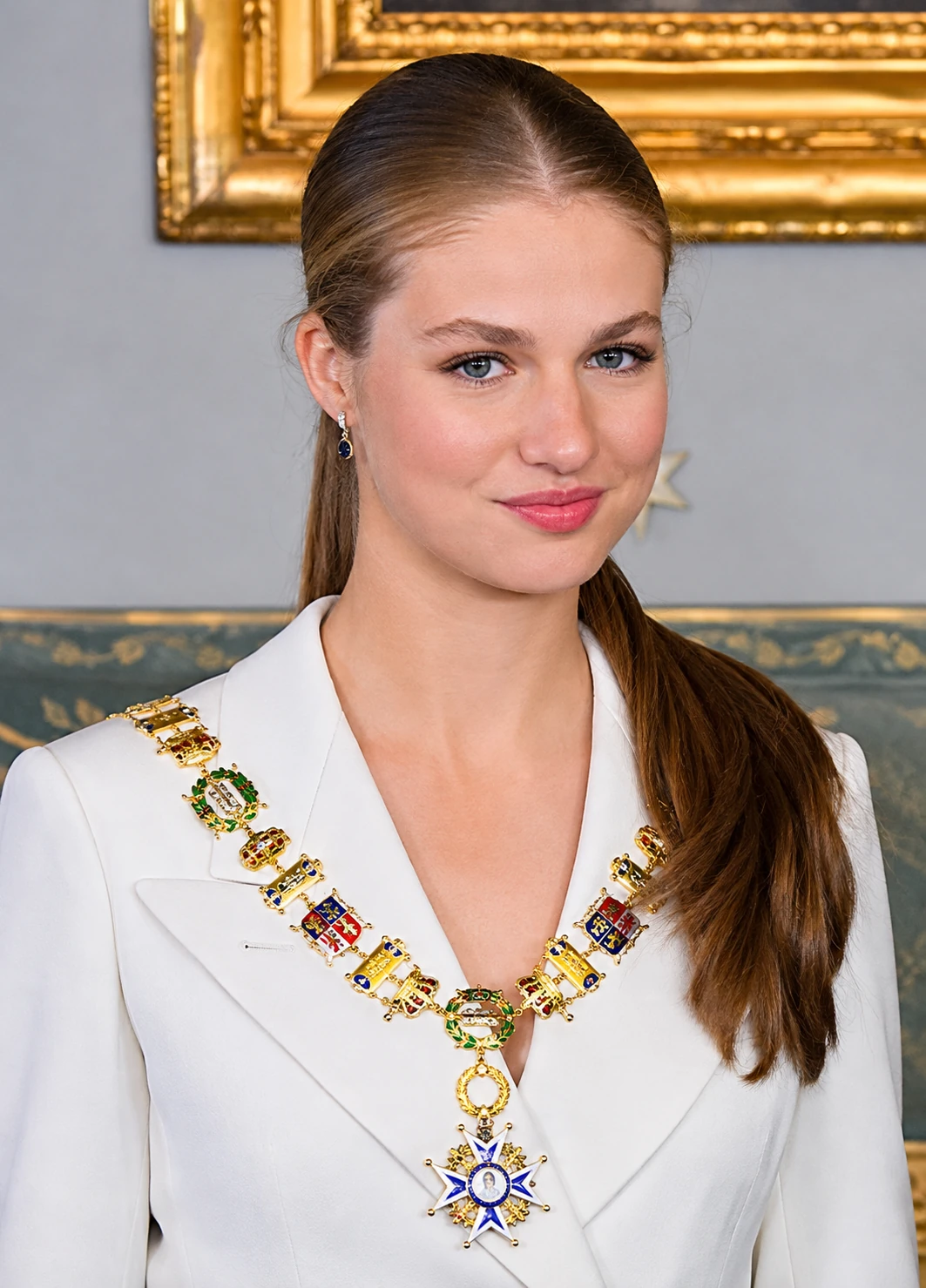
On 19 June 2014, Felipe VI was proclaimed King of Spain. On that same date, his eldest daughter, Leonor, became heir to the throne. She was eight years old. The change placed her first in line to succeed her father; it did not make her the reigning queen. Felipe became the monarch, while Leonor acquired the position and titles associated with being his heir.
The distinction matters because Spain’s Constitution gives the monarch a defined role as head of state, separate from the day-to-day work of government. The heir’s position is different: Leonor holds a place in the succession while her father reigns. Her later education, public appearances and constitutional oath belong to that continuing story, but the change in her status began with the proclamation in 2014.
The proclamation of Felipe VI
The decisive event was Felipe’s proclamation as king on 19 June 2014. From that day, the Crown’s institutional role belonged to him. Spain’s Constitution identifies the monarch as head of state and assigns the office the highest international representation of the Spanish state. Leonor’s place was not the same as her father’s: she became the person next in line to the throne.
The Constitution also assigns particular functions to the monarch, including sanctioning laws and holding supreme command of the armed forces. Royal acts are subject to countersignature, with responsibility resting on the countersigning authority. These arrangements help distinguish the Crown’s constitutional role from governing on a daily basis. In 2014, Felipe assumed that role as king; Leonor became heir rather than sharing his office.
Two sisters, different positions
Leonor was born in Madrid on 31 October 2005, the eldest daughter of Felipe and Letizia. Her younger sister, Sofía, was born on 29 April 2007. When their father became king in 2014, Leonor was eight and Sofía was seven. Their ages and places in the family help explain the immediate change: Leonor, the elder daughter, became the heir.
Their different positions did not prevent them from appearing together in later activities. On 23 April 2020, Leonor and Sofía read Don Quixote together. Three years later, on 31 October 2023, Sofía attended her sister’s constitutional oath before the Cortes Generales but did not take that oath. The two occasions show sisters participating together while holding distinct positions in the royal family.
The event that made her heir
Leonor’s new position followed directly from the event that made her father king. Article 57.2 of Spain’s Constitution connects the titles of the heir to birth or to the event that places a person in that position. For Leonor, that event was Felipe’s proclamation. Her status as heir therefore began on 19 June 2014, rather than on a later birthday or at a separate ceremony.
Being heir is not the same as exercising the monarch’s functions. The Constitution treats the monarch’s proclamation oath and the heir’s coming-of-age oath as distinct occasions. Leonor’s later oath marked a further constitutional step, but it was not the event that first made her heir. That distinction keeps the chronology clear: the succession position came in 2014; the oath followed in 2023.
Asturias, Girona and Viana
As heir, Leonor is known as Princess of Asturias. Her official biography also identifies other historical titles, including those of Girona and Viana. These names connect her position to historic kingdoms and crowns described in the biography. They are titles associated with the heir, not separate reigning offices, and they sit alongside her place in the succession to the Spanish Crown.
The Constitution’s reference to the title of Asturias and the traditional titles of the heir gives these names an institutional setting as well as a historical one. Asturias is also the title most readily encountered in Leonor’s public life: on 18 October 2019, she gave her first Princess of Asturias Awards speech at the Campoamor Theatre in Oviedo. Girona and Viana add further historical names to the same constitutional position.
From heir in 2014 to oath in 2023
On 31 October 2023, Leonor’s eighteenth birthday, she took the heir’s constitutional oath before the Cortes Generales. The date was significant because Article 61 provides for the heir’s oath on coming of age. Her sister Sofía attended. Leonor had already been heir for more than nine years, so the occasion was a new constitutional milestone within an existing status, not the beginning of that status.
Article 61 distinguishes the heir’s oath from the oath taken by a monarch at proclamation. The heir’s oath also includes loyalty to the monarch. That difference reflects their different positions: Felipe was king, while Leonor was his heir. Her birthday ceremony in 2023 and his proclamation in 2014 were therefore related parts of Spain’s constitutional framework, but they were not interchangeable events.
Different ways to prepare
Between those milestones, Leonor undertook several kinds of public and educational activity. She publicly read a constitutional text on 31 October 2018, then gave her first Princess of Asturias Awards speech in Oviedo in 2019. On 24 March 2021, she carried out her first solo institutional activity at Instituto Cervantes. Reading, addressing an audience and attending an institution alone were different forms of public participation.
Education brought a different set of subjects and settings. In February 2021, Casa Real announced a two-year International Baccalaureate programme at UWC Atlantic College in Wales, combining sciences and humanities with research and community service. A March 2023 plan set out military education across three services, beginning in Zaragoza. Later, a 2026 announcement described Political Science study at Universidad Carlos III de Madrid; her arrival was recorded on 7 September.
A question to take with you
Did Leonor become queen in 2014?
Reveal the answer
No. Felipe VI became king on 19 June 2014, and Leonor became his heir. The next chapter explores what her best-known title, Princess of Asturias, means.
Reading progress is saved only in this browser. It is not linked to your account.
Sources and further reading
- Casa Real · Official biography
- Casa Real · Education in Wales
- Casa Real · Military education plan
- Casa Real · Constitutional oath
- Casa Real · Official profile and speeches
- Casa Real · Aviation education
- Casa Real · University education announcement
- Casa Real · First solo activity: Instituto Cervantes
- Casa Real · Princess of Asturias Awards 2019
- Casa Real · Constitutional roles and succession
- Casa Real · Graduation at UWC Atlantic College
- Casa Real · Felipe VI: official biography
- Casa Real · Sofía: education in Wales
Editorial sources checked: