BIOGRAPHICAL SERIES · INDEPENDENT EDITORIAL
What Does Princess of Asturias Mean?
Share this article
For Instagram, TikTok and other apps, use More apps where supported, or copy the link and paste it into your post or message.
Leonor’s title identifies her as Spain’s heir, while linking her position to a constitutional rule and several older royal traditions.
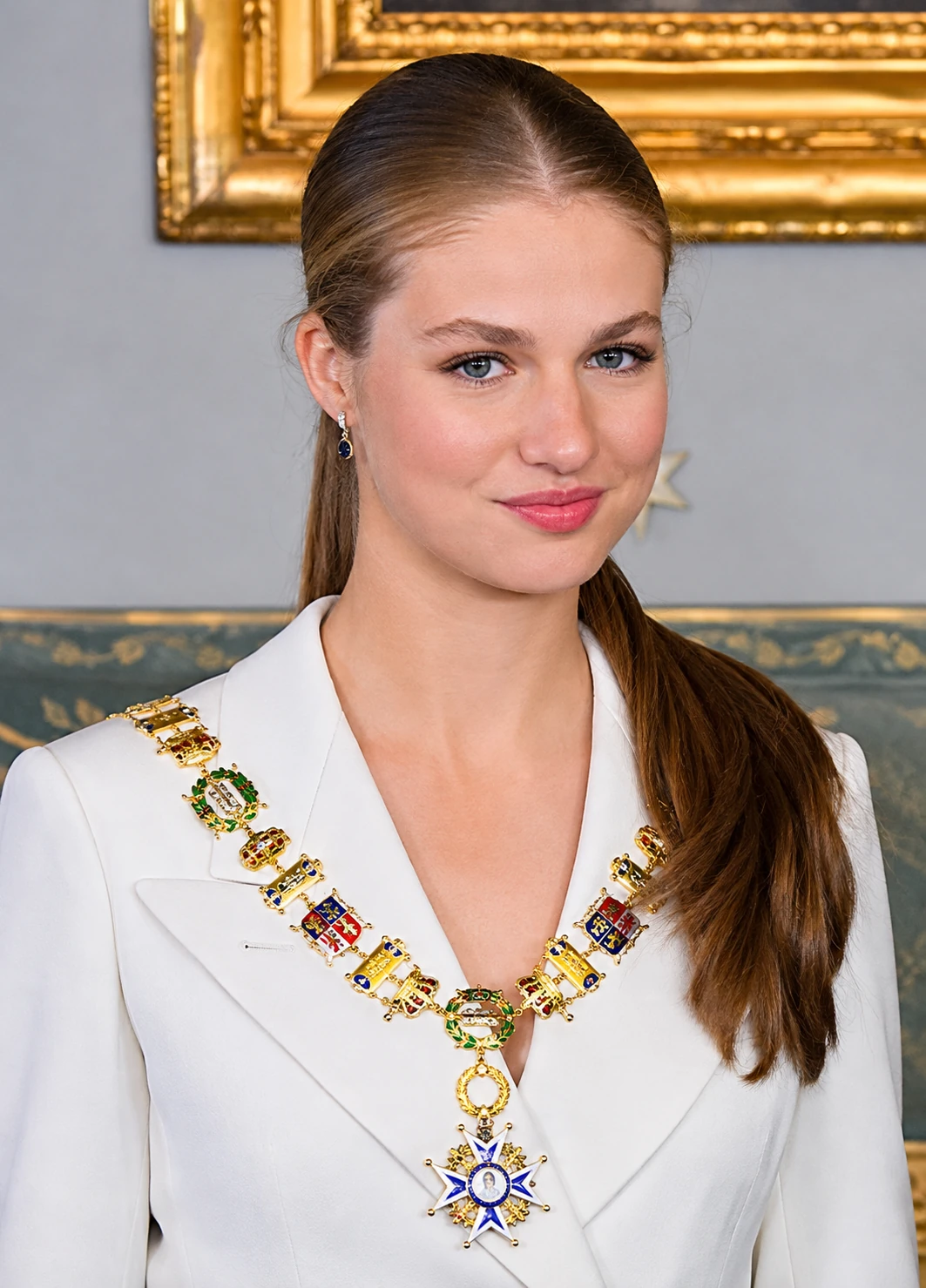
On 19 June 2014, Felipe VI was proclaimed King of Spain. His elder daughter, Leonor, became the heir to the Crown and, with that change, Princess of Asturias. She was eight years old. The title placed her next in line to the throne; it did not make her the reigning Queen. Felipe, rather than Leonor, became Spain’s head of state that day.
A royal title can sound like a job description, but this one is more precise: it identifies a place in the succession. Leonor’s official biography also names other historical titles, including Princess of Girona and Princess of Viana. Together, the names connect her constitutional position to territories associated with different strands of Spain’s royal history. Their meaning becomes clearer when they are separated from the powers of the monarch and the work of government.
Asturias in Leonor’s biography
Casa Real, Spain’s royal household, identifies Leonor as Princess of Asturias in her official biography. Born in Madrid on 31 October 2005, she is the elder daughter of Felipe and Letizia. Her younger sister, Sofía, was born on 29 April 2007. Leonor’s position changed in 2014 when her father became King: from then on, her title identified her as the person next in line to the Crown.
The word Asturias is not simply an alternative surname or a personal distinction chosen for Leonor. In the royal biography, it is associated with a historic kingdom, while the Constitution names Princess or Prince of Asturias as the title belonging to the heir. The distinction matters because the title describes a constitutional relationship to the Crown, not a claim that Leonor personally governs Asturias.
The constitutional rule
Article 57.2 of Spain’s Constitution attaches the title of Prince or Princess of Asturias, along with other traditional heir titles, from birth or from the event that makes a person heir. In Leonor’s case, that event was Felipe’s proclamation as King on 19 June 2014. The rule explains why the title followed the change in her father’s position rather than waiting for a later ceremony.
The Constitution also gives the heir a distinct oath at the age of majority. Article 61 separates that oath from the one a monarch takes at proclamation: both concern constitutional duties, but the heir’s oath also includes loyalty to the monarch. Leonor took the heir’s oath before the Cortes Generales on 31 October 2023, her eighteenth birthday. That was a separate milestone from becoming heir in 2014.
Girona and Viana
Asturias is the best-known of Leonor’s heir titles, but it is not the only one in her official biography. Casa Real also identifies her as Princess of Girona and Princess of Viana. The biography connects these names with the historic kingdoms and crowns it identifies, placing several inherited traditions alongside one another within the modern Spanish monarchy.
These titles are best understood as names attached to the same succession position, rather than as a series of separate elected posts. Article 57.2 makes room for traditional titles belonging to the heir as well as naming Asturias. Girona and Viana therefore add historical context to Leonor’s designation; they do not mean that she is simultaneously serving as the head of three territorial governments.
A title is not a government office
Being Princess of Asturias is different from holding the office of Spain’s head of state. Article 56 identifies the monarch as head of state and gives the monarch the highest international representation of the Spanish state. Leonor is the heir to that position, while Felipe VI holds it. Neither description should be confused with running the country’s day-to-day government.
The Constitution also sets out how responsibility for royal acts works. Article 64 provides for royal acts to be countersigned and assigns responsibility to the countersigning authority. A countersignature is an additional official signature that connects an act to an authority responsible for it. This constitutional arrangement helps explain why a royal title, an act of the Crown and an ordinary government office are not interchangeable terms.
Felipe as prince and as king
Felipe’s change of position on 19 June 2014 offers a direct comparison. Once he was proclaimed King, he became the monarch and head of state; Leonor became the heir. Their titles marked different points in the same succession, not two people simultaneously occupying the throne. The distinction is useful whenever the family appears together at an official event.
The Constitution gives the monarch functions that are distinct from the heir’s status. Article 62 includes sanctioning laws and supreme command of the armed forces among the King’s functions, while Article 64 provides for countersignature of royal acts. The heir’s title, by contrast, marks the line of succession. Leonor’s oath at eighteen recognised her constitutional position without turning her into the reigning monarch.
An awards speech and an oath
On 18 October 2019, Leonor gave her first Princess of Asturias Awards speech at the Campoamor Theatre in Oviedo. The event brought the title into a public setting associated with the awards. It was different in kind from the event that had made her heir five years earlier: the theatre provided a place for an address, not the constitutional mechanism by which she received the title.
Her oath on 31 October 2023 took place before the Cortes Generales, Spain’s parliament, under the rule for an heir reaching adulthood. Sofía attended but did not take that oath. The two settings show different uses of Leonor’s public position: an awards speech in Oviedo and a constitutional ceremony in parliament. The next episode follows another side of that position, as Leonor grows up in public.
A question to take with you
Did becoming Princess of Asturias make Leonor Queen?
Reveal the answer
No. She became heir when Felipe VI was proclaimed King on 19 June 2014. Felipe remains the reigning monarch and Spain’s head of state.
Reading progress is saved only in this browser. It is not linked to your account.
Sources and further reading
- Casa Real · Official biography
- Casa Real · Education in Wales
- Casa Real · Military education plan
- Casa Real · Constitutional oath
- Casa Real · Official profile and speeches
- Casa Real · Aviation education
- Casa Real · University education announcement
- Casa Real · First solo activity: Instituto Cervantes
- Casa Real · Princess of Asturias Awards 2019
- Casa Real · Constitutional roles and succession
- Casa Real · Graduation at UWC Atlantic College
- Casa Real · Felipe VI: official biography
- Casa Real · Sofía: education in Wales
Editorial sources checked: